
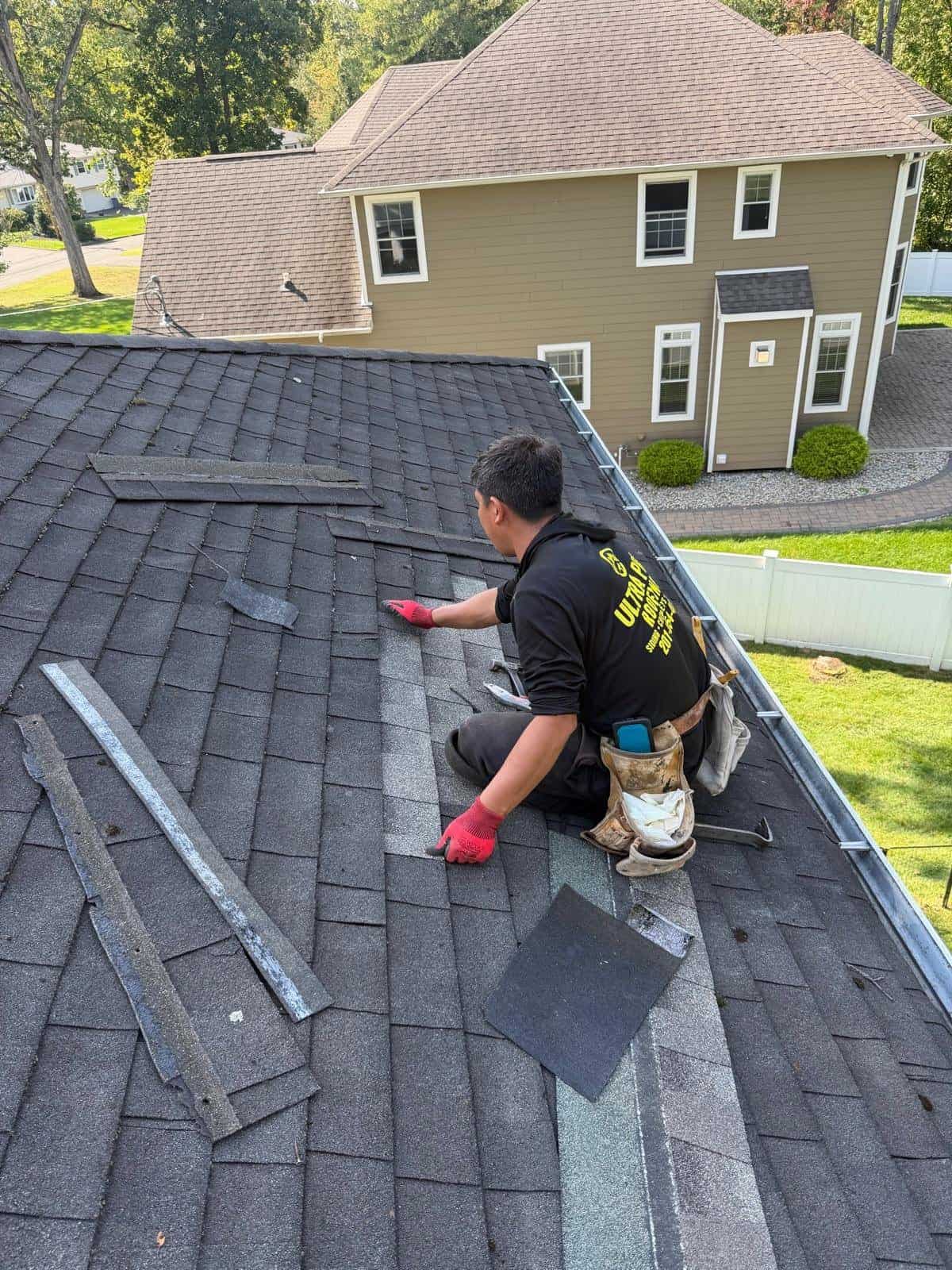
Contain the water inside, keep off the icy roof, photograph everything, and call a roofer for an emergency tarp or temporary repair. Then find out what is actually causing the water. In winter, many “roof leaks” are really ice dams, attic condensation or a chimney problem, and each needs a different fix.
The first hour: protect the inside of your home
- Catch the water. Put buckets and towels down and move furniture, electronics and rugs out of the way.
- Watch the electricity. If water is near a light fixture, ceiling fan or outlet, switch off that circuit at the panel.
- Relieve a bulging ceiling. If paint or drywall is ballooning with water, put a bucket underneath and poke a small hole at the lowest point with a screwdriver, but only if there’s no light fixture or wiring nearby and you’ve switched off that circuit. A controlled drip does far less damage than a ceiling that gives way. Don’t stand directly under it.
- Go into the attic if you can do it safely. Find where the water is coming in, put a bucket or plastic sheet there, and take a photo. That photo helps the roofer find the source fast.
Don’t go on the roof
A wet roof is dangerous. A roof with snow or ice on it is worse, and ladders ice up on the rungs and boots. Emergency management agencies are blunt about it: leave roof work in winter conditions to trained professionals with safety gear. No leak is worth a fall.
Document everything for insurance
The NJ Department of Banking and Insurance advises homeowners after storm damage to:
- Photograph and video all damage before you clean it up or throw anything out. Keep damaged items if you can, since adjusters often want to see them.
- Make temporary repairs to stop further damage, and keep every receipt. An emergency tarp is exactly this kind of repair.
- Call your agent or insurer as soon as possible to report the loss, with your policy number ready.
Write down the date and time the leak started and what the weather was, for example “heavy wind overnight” or “two days of melting snow”. It matters for the claim.
What an emergency roof tarp actually involves
A proper emergency tarp isn’t a sheet of plastic thrown over the roof. We cover the damaged area with a heavy-duty tarp, run it over the ridge so water can’t get underneath, and fasten it with wood battens so wind can’t peel it off. Done right, it keeps the house dry for weeks until the permanent repair can be made in decent weather.

Is it really a roof leak? A winter diagnosis guide
Where the water shows up and when it happens usually tell you the cause:
| What you see | Most likely cause | What fixes it |
|---|---|---|
| Water at the top of an exterior wall or along the ceiling edge, after snow, with big icicles outside | Ice dam at the eaves | Safe ice removal now. Attic air sealing, insulation and an ice-and-water barrier long term. See our ice dam guide. |
| Drips from nail tips, frost on the underside of the roof boards on cold mornings, wet insulation when the sun comes out | Attic condensation: warm, moist house air freezing in the attic | Air sealing, bath fans vented outside (not into the attic), balanced ventilation. No new shingles needed. |
| Stain on the ceiling or wall next to the chimney | Chimney flashing, crown or missing cap | Chimney repair, not roof replacement. See our chimney freeze-thaw guide. |
| Leak only during wind-driven rain | Lifted or missing shingles, or wall/siding gaps | Shingle repair. See missing shingles. |
| Stain in a ring around a bathroom or kitchen ceiling vent pipe | Cracked pipe boot (rubber collar around a vent pipe) | Replace the boot. A quick, inexpensive fix. |
| Water around a skylight | Skylight flashing or a failed seal | Re-flash or replace the skylight. |
This is why we always check the attic, not just the shingles. Selling someone a roof to fix a condensation problem doesn’t stop the water.
How homeowners insurance treats roof leaks in New Jersey
Every policy is different, so read yours or call your agent. The general pattern:
- Usually covered: sudden, accidental damage. Examples are a tree limb through the roof, shingles torn off in a windstorm, and the interior water damage that follows.
- Usually not covered: leaks from age, wear or lack of maintenance, like shingles worn out after 25 years or flashing that failed slowly.
- You choose your contractor. NJ DOBI notes you are not required to use the insurance company’s recommended contractor.
- Public adjusters are optional. They are licensed by DOBI and work for a percentage of your settlement, but you don’t need one to file or settle a claim.
Watch out for storm chasers
After every big storm, out-of-town crews knock on doors in Bergen and Passaic counties. Before you sign anything:
- Ask for their NJ home improvement registration number (it starts with “13VH”) and look it up with the NJ Division of Consumer Affairs.
- Get a written contract for any job over $500. NJ law requires it, and you can cancel until midnight of the third business day after you receive your copy.
- Don’t pay most of the price up front. And be wary of anyone pushing you to sign the same day “before the insurance deadline”.
Can a roof be repaired in winter?
Yes. Temporary repairs can be done in almost any weather, and permanent repairs on a dry day. Replacing shingles, pipe boots and flashing is routine winter work. In cold weather we hand-seal new shingles with roofing cement, because the factory sealant strip doesn’t activate below about 40°F. Larger repairs or a full replacement may wait for a milder stretch, with the tarp keeping you dry in the meantime. See what a new roof costs in NJ.
Frequently asked questions
Do you offer 24/7 emergency roof repair?
Yes. Ultra Pro answers emergency roof and chimney calls 24/7 across North Jersey. Call (201) 554-4159.
Does insurance cover a leak caused by an ice dam?
Many policies cover sudden interior water damage, including from ice dams. Coverage for the roof itself and for the underlying cause varies. Check your policy and report the loss quickly.
How much does an emergency tarp cost?
It depends on the size of the damaged area, the roof’s height and pitch, and access. We give you the price before we start, and the receipt is a mitigation cost you can submit to your insurer.
Should I call my insurer or a roofer first?
Stop the damage first: call a roofer for the tarp, then report to your insurer the same day. Insurers expect you to prevent further damage, and our photos and report support your claim.
Water coming in right now?
Call Ultra Pro Construction at (201) 554-4159, 24/7. We’re a family-owned, NJ-licensed (13VH11344600), fully insured roofing and chimney contractor based in Ridgewood, with GAF Certified Plus and Owens Corning Preferred credentials. If it’s not an emergency, request a free roof inspection and we’ll find the leak before it finds your ceiling.


