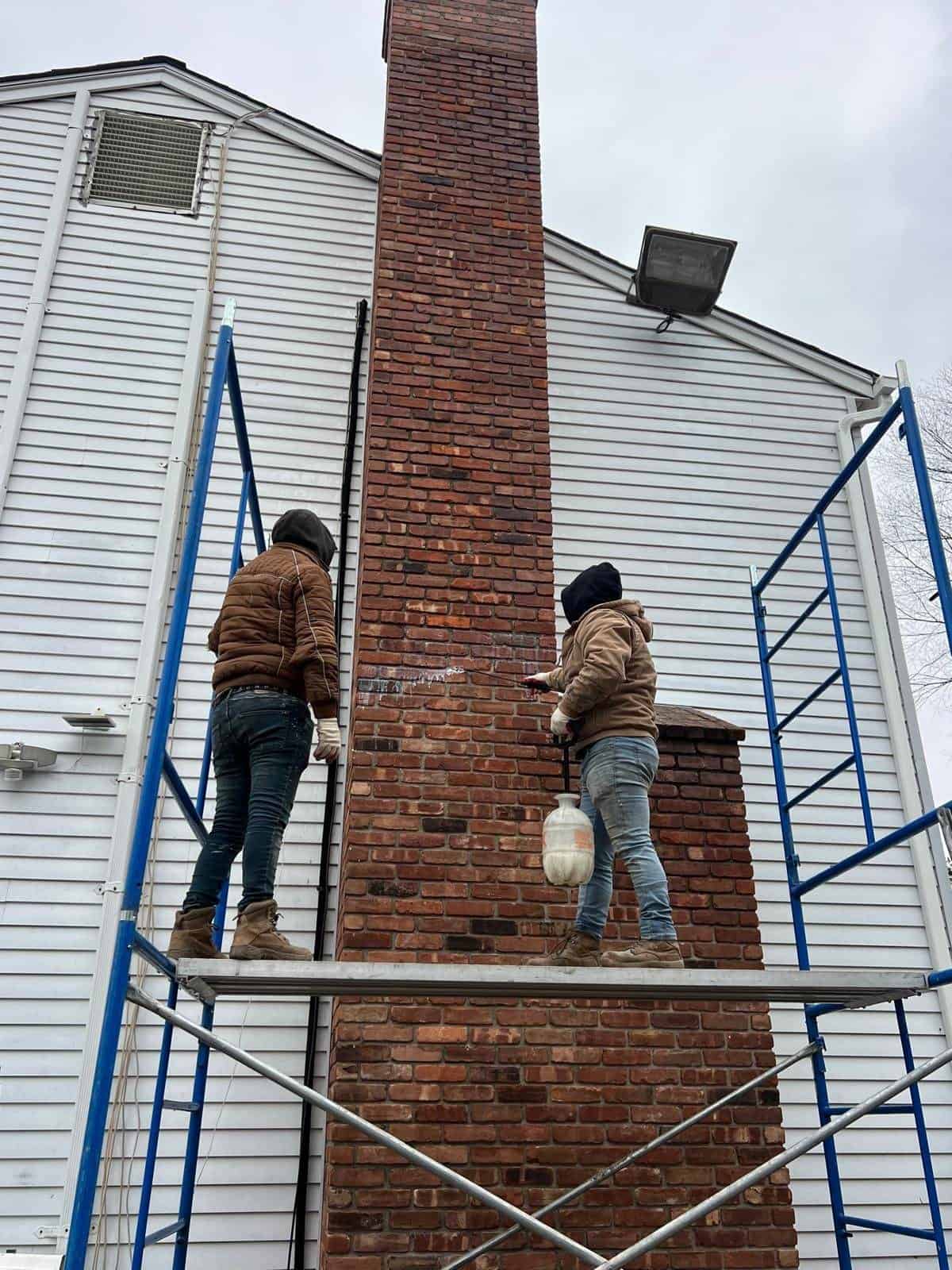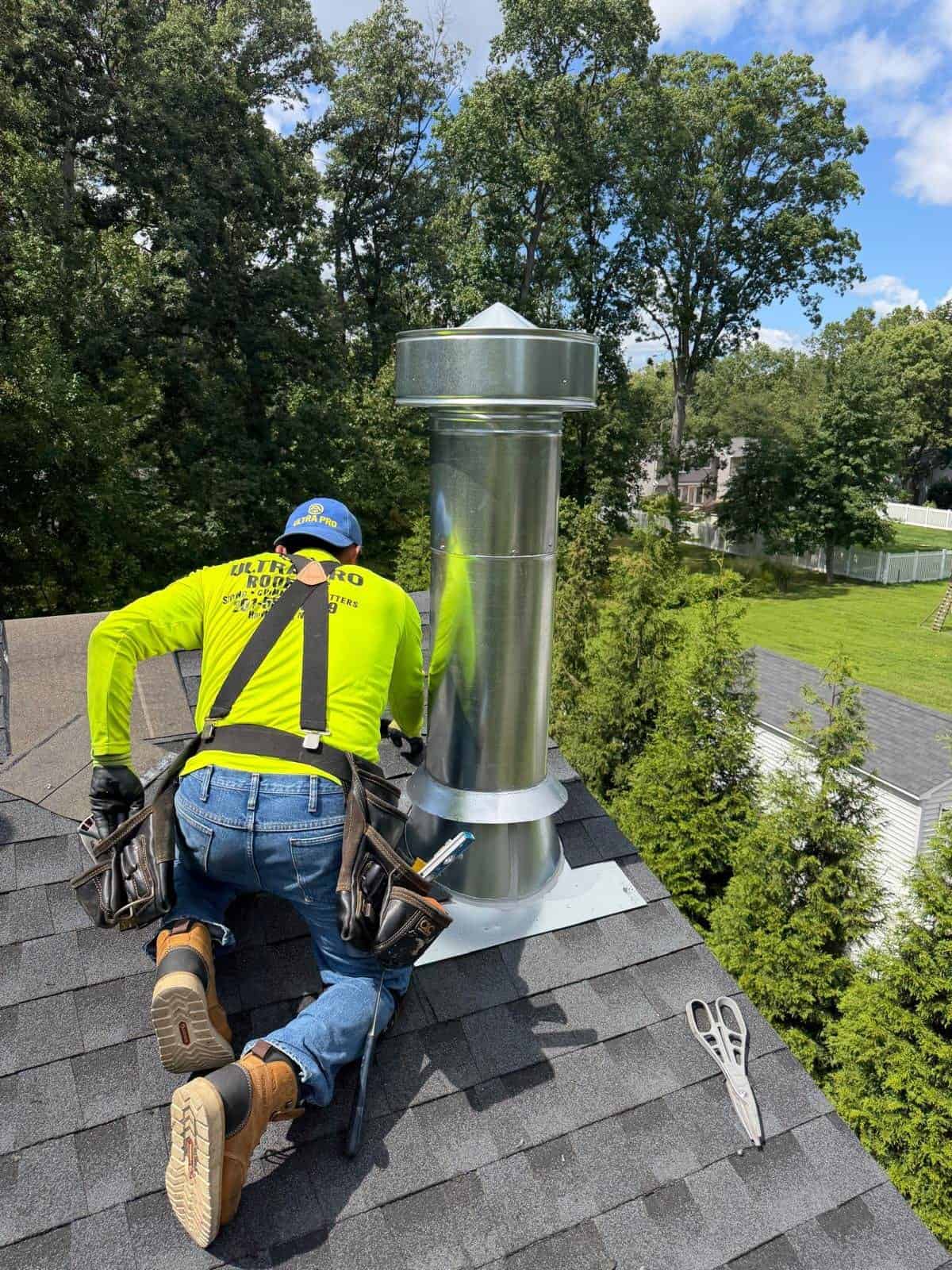
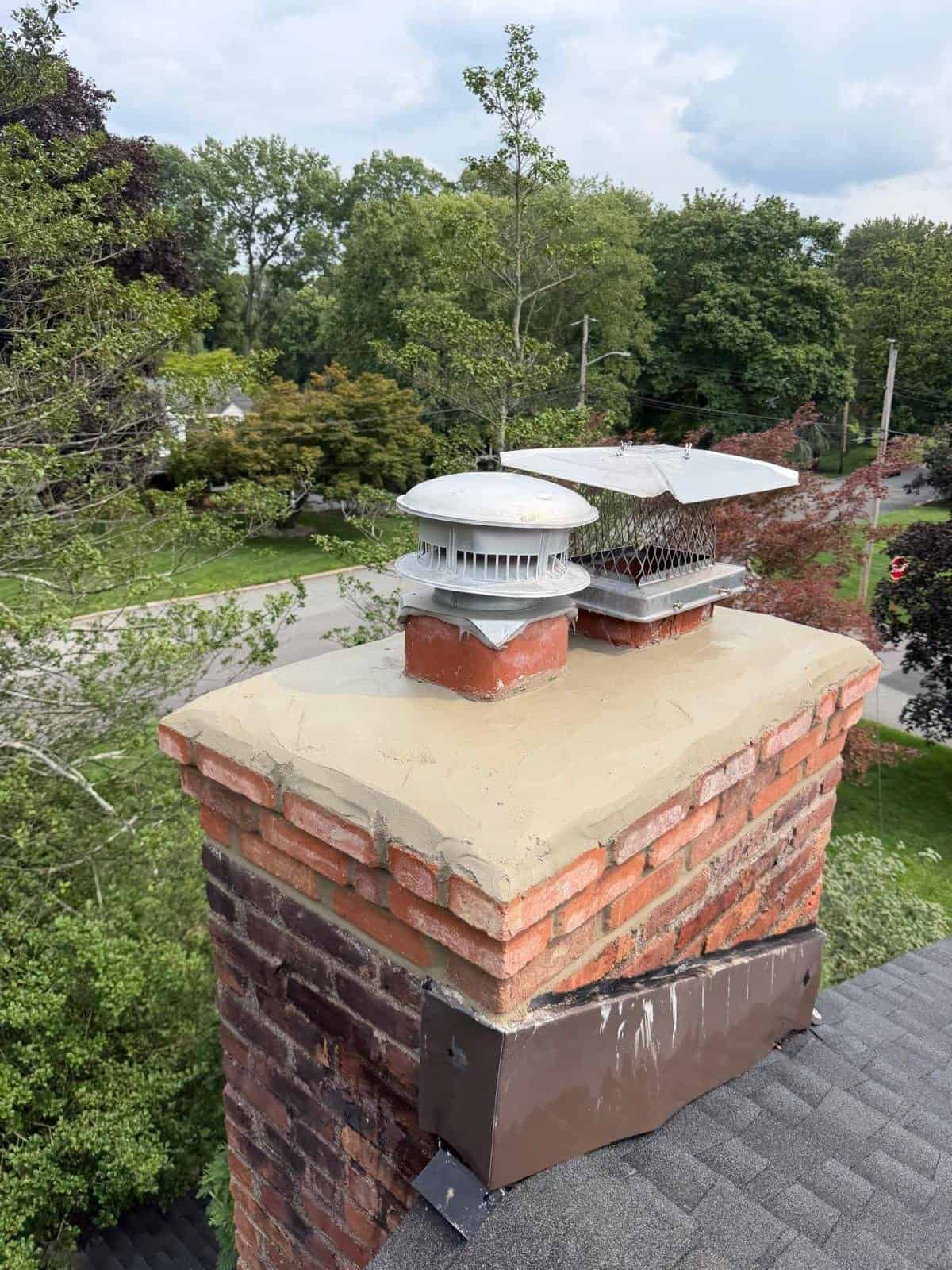
Water causes more chimney damage than fire. In New Jersey, rain and snowmelt soak into the brick, mortar and crown, then freeze and expand. Night after night, that cracks the crown and pops the faces off bricks (spalling). Caught early, the fix is small: seal or rebuild the crown, add a cap, repoint the mortar and apply a breathable water repellent. Left alone, freeze-thaw damage ends in a partial or full chimney rebuild.
How freeze-thaw tears masonry apart
Brick and mortar act like a sponge. Water expands by about 9% when it freezes, so water inside a brick or a crack pushes it apart from the inside. One freeze does little. But a New Jersey winter swings above and below 32°F again and again, and every cycle widens the crack a little and lets more water in next time.
The chimney is the most exposed masonry on your house. It stands above the roof in wind, driving rain and snow on all four sides, with no overhang to protect it. That’s why chimneys fail years before a home’s foundation or brick walls do.
Where chimneys fail, and the signs to look for
| Part | What goes wrong | Sign you can spot |
|---|---|---|
| Crown (the concrete slab on top) | Cracks, crumbles, or was never a real crown, just a thin sloped layer of mortar | Cracks you can see with binoculars, chunks on the roof, water in the firebox |
| Brick | Spalling: the face of the brick pops off | Flaking or missing brick faces, brick chips on the roof or in the gutters |
| Mortar joints | Erodes and recesses, opening gaps | Joints you could poke a key into, sand in the gutters |
| Cap | Missing or rusted out, so rain and animals go straight down the flue | No cap visible, rust streaks down the brick |
| Flashing | Sealant dries out, metal lifts from the roof or the brick | Stains on the ceiling or wall next to the chimney |
| Flue liner | Tiles crack, often after water or a chimney fire | Pieces of tile in the firebox, smoke or odors in other rooms |
Inside the house, watch for a rusty damper, water or white mineral deposits in the firebox, a damp, musty smell, and stains on the ceiling or wall next to the chimney.
Outside, white chalky streaks on the brick (efflorescence) mean water is moving through the masonry and leaving salts behind as it dries. It’s an early warning.
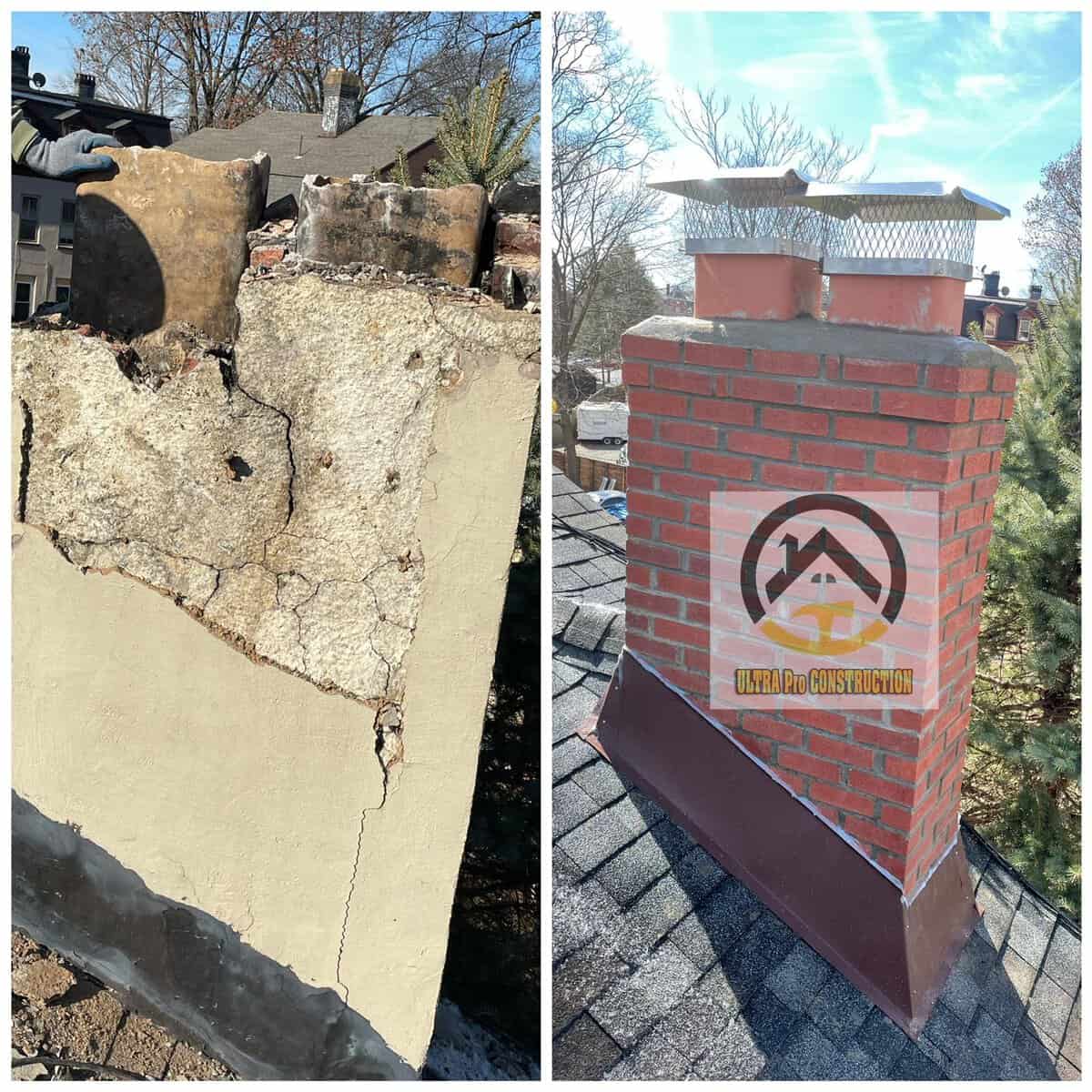
Crown vs. “mortar wash”: why so many NJ chimneys crack on top
On many older homes, the top of the chimney isn’t a real crown at all. It’s a thin, sloped layer of ordinary mortar troweled around the flue, called a mortar wash. Ordinary mortar isn’t made to sit exposed to weather on a flat surface, so it cracks within a few winters and channels water straight into the chimney.
A proper crown is cast from a portland cement-based concrete, slopes away from the flue, and overhangs every side of the chimney by at least 2 inches with a drip edge underneath. The overhang throws water clear of the brick instead of letting it run down the face.
Which repair do you actually need?
Chimney repairs follow a ladder. The earlier you catch the damage, the lower the rung:
| What we find | The fix | If it’s ignored |
|---|---|---|
| Hairline cracks in a sound crown | Clean and seal the crown with a flexible crown coating | Cracks widen each winter and water reaches the flue and brick |
| Wide cracks or a crumbling mortar wash | Rebuild the crown with a proper overhang and drip edge | Brick and mortar below start spalling |
| Eroded mortar joints | Repointing: grind out the old mortar and pack new mortar into the joints | Bricks loosen and the chimney can start to lean |
| A few spalled bricks | Replace the individual bricks, then repoint | Spalling spreads to neighboring bricks |
| Many loose bricks or a lean above the roofline | Partial rebuild from the roofline up | Full rebuild, and a safety hazard if bricks fall |
| No cap, or a rusted cap | Stainless steel cap with mesh | Water, animals and debris go straight down the flue |
| Stains next to the chimney inside | New step and counter flashing | Rotted roof decking and framing around the chimney |
After repairs, we often recommend a vapor-permeable water repellent made for masonry. It keeps rain out but lets moisture inside the brick escape. Never paint a chimney or coat it with an ordinary sealer. A coating that doesn’t breathe traps moisture inside the brick and makes freeze-thaw damage worse.

Can chimney repairs be done in winter?
Some can, some should wait. Mortar and concrete need temperatures above about 40°F while they cure, so full crown pours and rebuilds are scheduled on mild days or in early spring. Caps, flashing repairs, crown sealing and emergency leak stops can usually be done between cold snaps. If water is coming in now, we stop the leak first and plan the masonry for the right weather.
How to protect your chimney this winter
- Check the cap. If you can’t see one from the street, get one. It’s the cheapest protection a chimney can have. Read the benefits of a chimney cap.
- Look at the top after every big storm. Use binoculars from the yard, not a ladder.
- Keep gutters and downspouts flowing so water doesn’t splash and pool against the chimney base.
- Book an annual inspection. A sweep who gets on the roof catches crown cracks while sealing is still enough. See our chimney sweep checklist.
Frequently asked questions
How much does chimney crown repair cost in New Jersey?
It depends on whether the crown can be sealed or must be rebuilt, the chimney’s size, how many flues it has, and how hard the roof is to access. Sealing a sound crown costs far less than a rebuild, which is why early inspection pays. We give you photos and a written price before any work.
Is spalling brick dangerous?
A few spalled faces aren’t an emergency, but they show that water is getting in. If bricks are loose or the chimney leans, keep people away from the area below and call a pro right away.
My chimney leaks only when it rains hard. What’s wrong?
The usual suspects, in order, are flashing, the crown, a missing cap and porous brick. Our flashing guide explains the most common one.
Do I need a new chimney or just repairs?
Most chimneys need repairs, not replacement. A rebuild makes sense when the brick above the roofline is loose, leaning or badly spalled. Even then, it’s usually only the part above the roof.
Get your chimney checked before the next freeze
Ultra Pro Construction has repaired and rebuilt chimneys across North Jersey for 25 years. We’re NJ licensed (13VH11344600), fully insured and BBB A+ rated. We go up on the roof, photograph everything, and tell you which rung of the repair ladder your chimney is on.
Call (201) 554-4159 or book a chimney inspection. See all our chimney services and our guide to chimney repair in New Jersey.