
In New Jersey, have your chimney inspected once a year, ideally in the fall before your first fire. The national fire-safety standard (NFPA 211) calls for that yearly inspection on every chimney, including those serving gas and oil furnaces. The Chimney Safety Institute of America recommends sweeping masonry fireplaces at 1/8 inch of soot, or sooner if there is any shiny, glazed creosote.
Why the first fire of the season is the riskiest
A chimney sits unused for six months, but it doesn’t sit still. Over the summer, birds and raccoons nest in open flues, leaves and twigs collect on the smoke shelf, and rain soaks into last winter’s creosote. That wet creosote is what makes a fireplace smell like an ashtray on humid days (here’s why chimneys smell).
Then the first cold night arrives, the whole street lights a fire, and every problem shows up at once: a blocked flue pushes smoke into the room, a nest catches, or leftover creosote ignites. That’s why chimney-sweep searches in New Jersey peak in October and stay high through January. By December, good sweeps are booked weeks out.

Inspection vs. sweep: what you’re actually paying for
A sweep removes soot, creosote and debris from the firebox, smoke chamber and flue. An inspection checks whether the chimney is safe to use: liner condition, clearances, cap, crown, flashing and draft. A good visit does both. NFPA 211 defines three levels of inspection:
| Inspection | When you need it | What it covers |
|---|---|---|
| Level 1 | Every year, when nothing about the system has changed | Readily accessible parts of the chimney, firebox and flue. Confirms no blockage or obvious damage. |
| Level 2 | Buying or selling a home, after a chimney fire or a storm, or when you change the fuel or the appliance (for example a new insert or a gas conversion) | Everything in Level 1, plus a camera scan of the whole flue and a check of the attic, crawl space and roof sections next to the chimney |
| Level 3 | When a Level 2 finds a hidden hazard that can’t be reached any other way | Removing parts of the structure, such as a wall section or the crown, to reach concealed areas |
How often should a chimney be cleaned?
The rule is inspect every year and clean when needed. The Chimney Safety Institute of America says masonry fireplaces should be swept at 1/8 inch of sooty buildup, because that is already enough fuel for a chimney fire. In practice:
- Fireplace used on weekends and holidays: inspect and usually sweep once a year, before the season.
- Wood stove or insert burning daily: inspect before the season and check again mid-winter. Daily burners often need a second sweep around February.
- Gas fireplace or gas furnace flue: inspect yearly. Gas burns clean, but its exhaust is wet and acidic, which wears out old clay tile liners, and a nest or debris in a gas flue can push carbon monoxide back into the house.
- Oil furnace flue: inspect yearly. Oil leaves soot and acidic residue, so it usually needs cleaning more often than a gas flue.
Your 10-minute pre-check (do this today)
You can’t see inside the flue, but you can catch the warning signs that mean “don’t light it yet”:
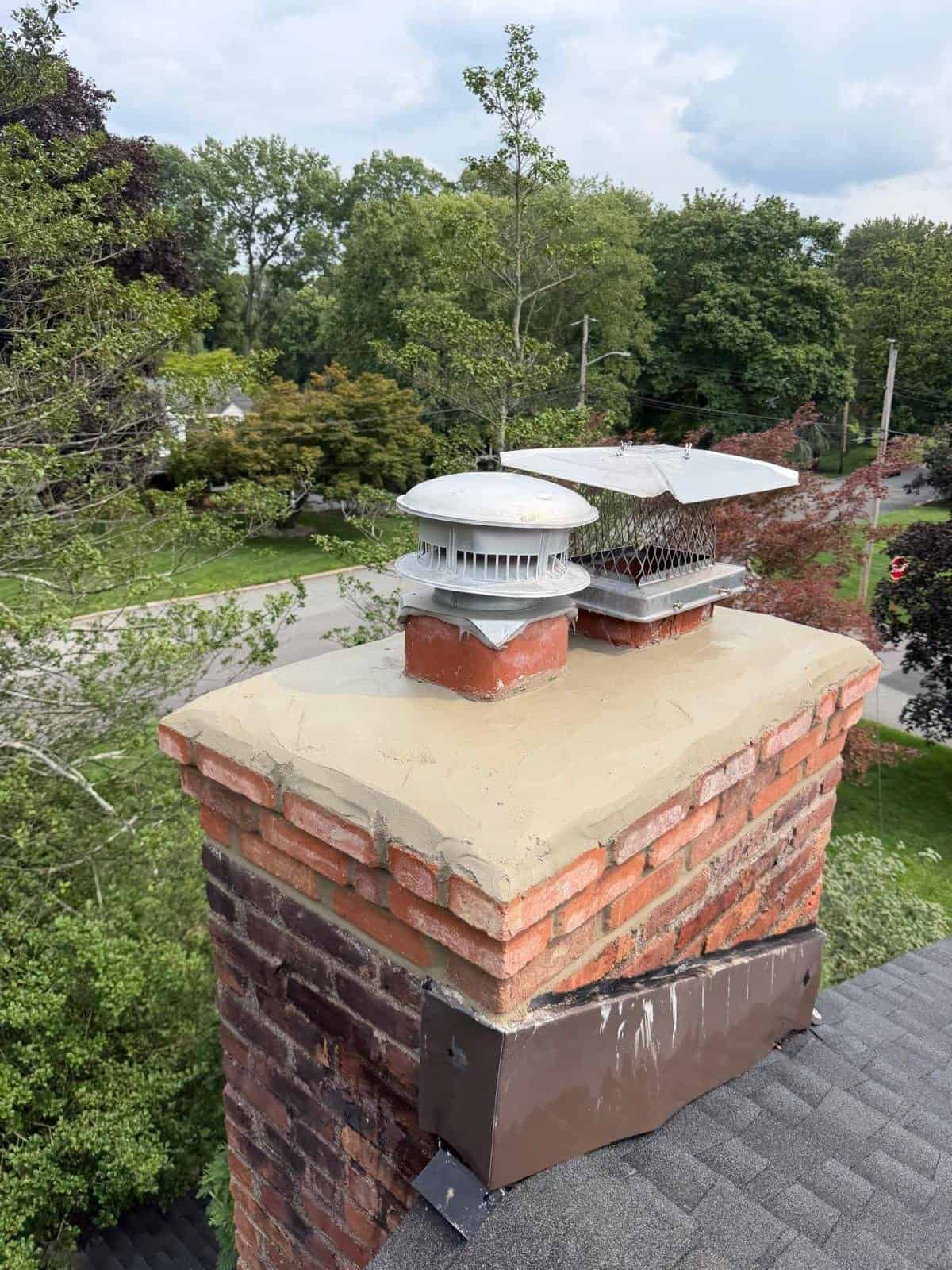
- Look at the chimney top from the street. Is there a cap? Any missing bricks, a cracked concrete top (the crown) or a visible lean?
- Open the damper and shine a flashlight up. Do you see daylight, or debris, twigs or nesting material?
- Check the firebox for cracked firebrick or gaps in the mortar joints.
- Look for white, chalky staining on the outside bricks, and water stains on the ceiling or wall next to the chimney. Both mean water is getting in.
- Smell the fireplace on a damp day. A strong, sour smoke smell means creosote is still in the flue.
- Test your smoke alarms and carbon monoxide alarm.
If you tick any of the first five, book an inspection before you burn anything.
The three stages of creosote
Creosote is condensed wood smoke, and it builds up in stages:
- Stage 1, flaky soot. Dry, black and powdery. A standard brush sweep removes it easily.
- Stage 2, crunchy flakes. Tar-like, shiny black flakes, a sign of a fire that isn’t getting enough air. It still comes off with rotary tools.
- Stage 3, glaze. A hard, shiny coating like dripped tar. It is highly flammable, hard to remove and needs chemical treatment. If you see glaze, stop using the fireplace until it’s treated.

Burn smarter this winter (less creosote, more heat)
- Burn only dry wood. The EPA says wood burns best below 20% moisture. Season split wood for at least six months, and check it with an inexpensive moisture meter.
- Store it right. Keep wood outdoors, off the ground, and cover only the top. Covering the sides traps moisture.
- Never burn painted, stained or pressure-treated wood, plywood or particle board, or anything with glue. After the holidays, keep wrapping paper and cardboard boxes out of the fireplace. They flare up fast and throw burning paper up the flue.
- Give the fire air. A smoldering fire with the doors shut makes the most creosote. A hot fire with good airflow makes the least.
Signs of a chimney fire, and what to do
Many chimney fires are slow and quiet, which is why yearly inspections matter. A fast one is hard to miss:
- A loud roaring sound, like a freight train or a jet
- Popping and cracking inside the chimney
- Dense black smoke from the chimney top
- Burning debris or sparks shooting out of the top
If it happens: call 911 and get everyone, pets included, out of the house. If you can do it safely, close the stove doors or glass doors to cut off air. Even if the fire seems out, let the fire department check it. Then don’t use the fireplace again until it has had a Level 2 inspection. Chimney fires often crack flue tiles, which can let heat and carbon monoxide into the walls.
Selling or renting in New Jersey this winter?
New Jersey requires a fire-safety certificate (CSACMAPFEC) before a one- or two-family home is sold or rented. One condition is a working carbon monoxide alarm in any home with a fuel-burning appliance, which includes a fireplace or a gas or oil furnace. NFPA 211 also calls for a Level 2 chimney inspection at a property sale. Buyers’ home inspectors increasingly flag chimneys and ask for one, so having the report in hand avoids last-minute renegotiation.
What happens when Ultra Pro sweeps your chimney
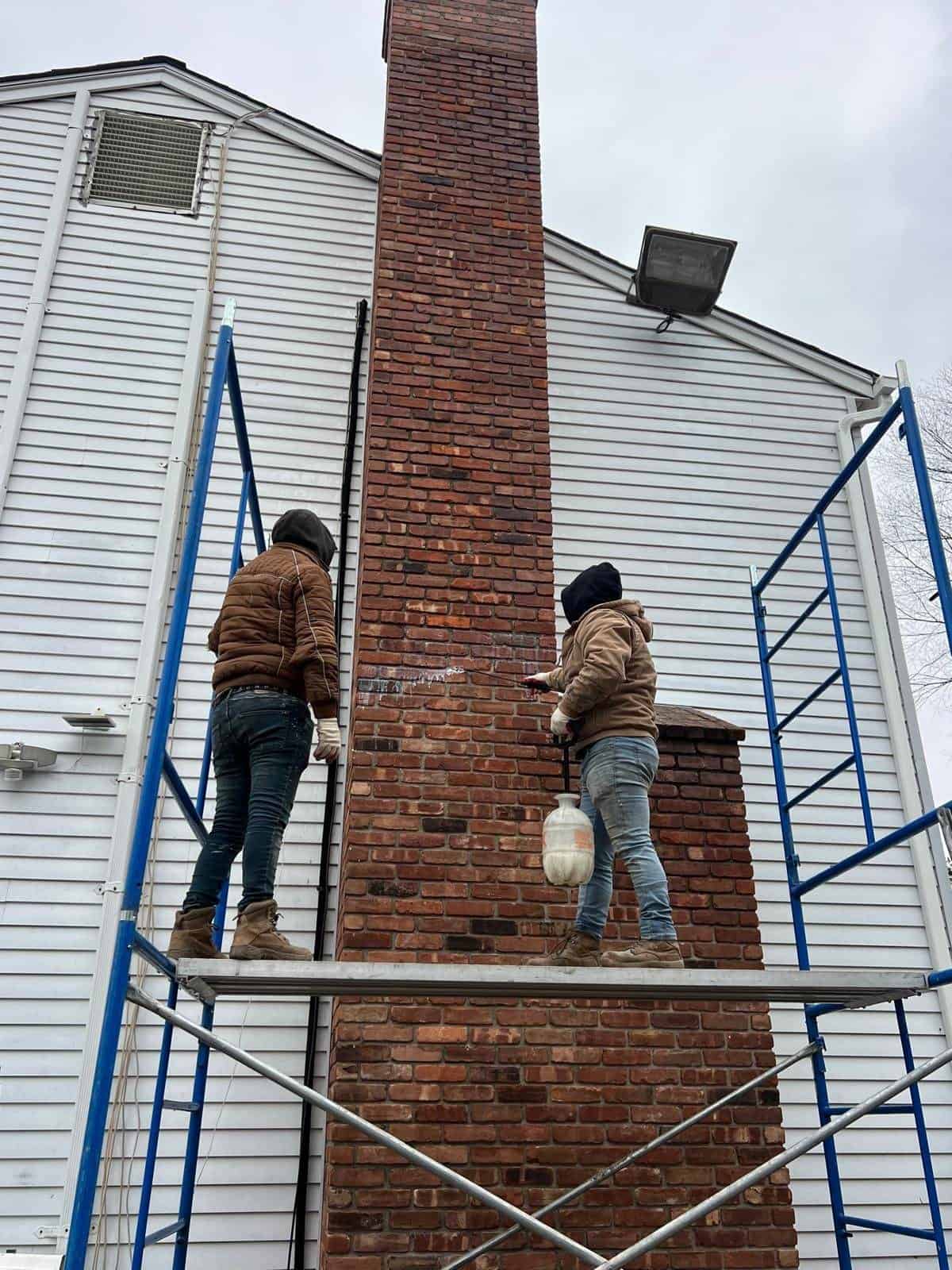
- We protect the room with drop cloths and run a sealed, high-powered vacuum, so soot stays out of your house.
- We clean the firebox, smoke chamber and full flue with rotary brushes.
- We check the damper, firebox, liner and smoke chamber. On a Level 2 inspection we also run a camera through the whole flue.
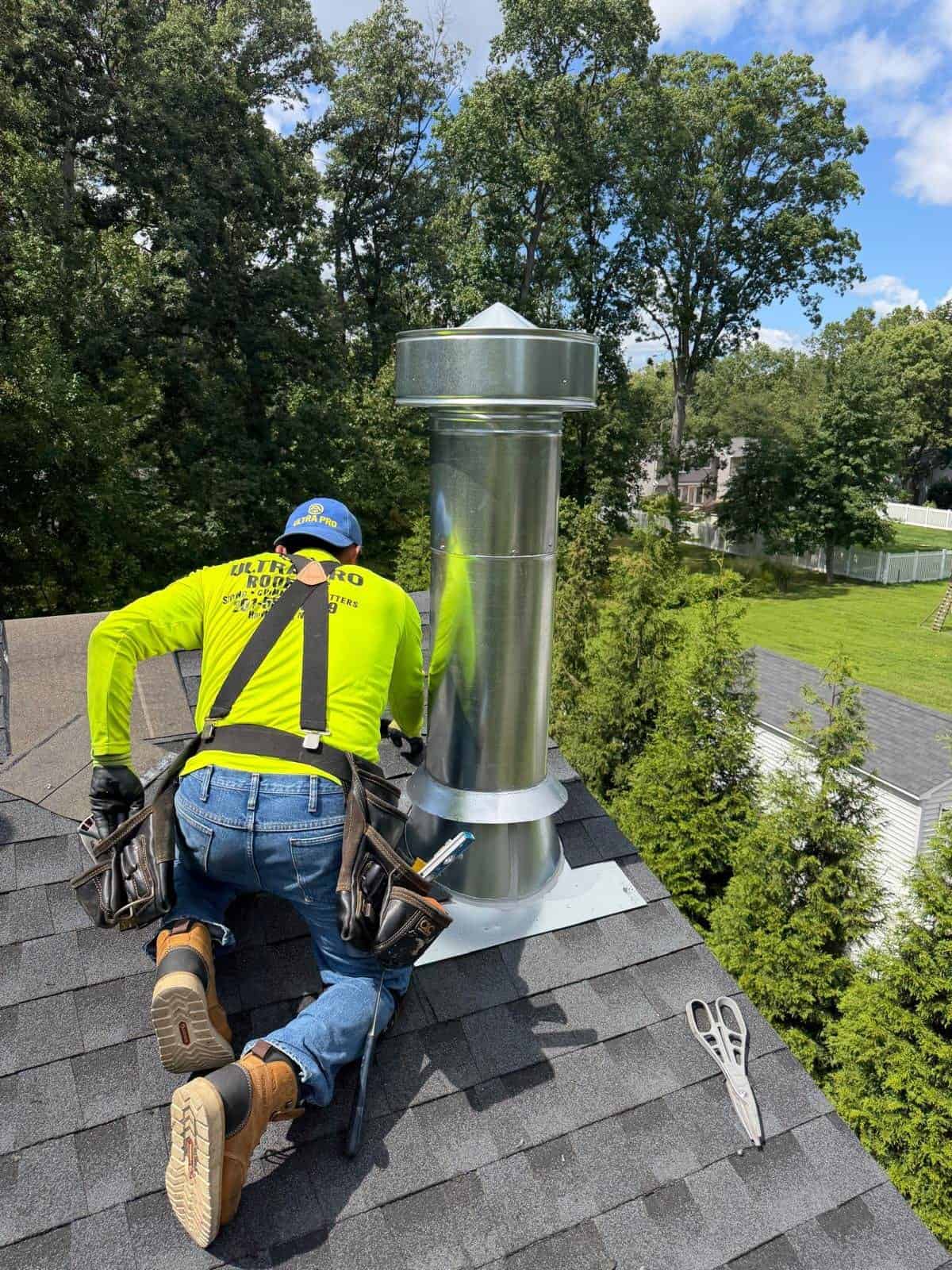
- We go up on the roof to check the cap, crown, bricks and flashing. That’s where most winter leaks start.
- You get photos and a plain-English list of anything that needs attention, with prices. Nothing gets done without your OK.
If we find a missing cap, cracked crown or failing flashing, we can fix it, usually on the same visit. Read about chimney caps and liner insulation, or see all our chimney services.

Frequently asked questions
How much does chimney cleaning cost in New Jersey?
At Ultra Pro, chimney cleaning starts at $200 when you mention our website or claim the coupon online. The final price depends on how many flues you have, how heavy the buildup is, and whether there’s glazed creosote that needs chemical treatment. You’ll know the price before we start.
Do gas fireplaces need a chimney sweep?
They need a yearly inspection more than a sweep. Gas exhaust is wet and corrosive, so liners and venting wear out, and blocked gas flues are a carbon monoxide risk.
Can I just burn a creosote-sweeping log?
Those logs can loosen some buildup, but they don’t remove it, and they don’t inspect anything. They are not a replacement for a sweep.
How long does a chimney sweep take?
A single flue with normal buildup usually takes about an hour or two, including the roof check. A Level 2 inspection with camera takes longer.
Is it too late to book once it’s cold?
No. We sweep chimneys all winter. Book early, though: the first cold snap fills the schedule fast.
Book your chimney sweep before the first fire
Ultra Pro Construction is a family-owned roofing and chimney company based in Ridgewood, serving homeowners across North and Central Jersey. We’re NJ licensed (Lic# 13VH11344600), fully insured and BBB A+ rated.
Call (201) 554-4159 or request your inspection online. Mention this post to get chimney cleaning from $200.