
An ice dam is a ridge of ice along the edge of the roof that traps melting snow behind it. The water backs up under the shingles and leaks into walls and ceilings. Ice dams are caused by heat escaping from the house into the attic, which melts snow on the upper roof while the overhang stays frozen. To remove one safely, rake the snow off from the ground and melt channels with calcium chloride, never by chipping. To stop them for good, seal and insulate the attic, ventilate it, and make sure the roof has an ice-and-water barrier at the eaves.
Why New Jersey gets ice dams
Three things have to happen together: snow on the roof, outdoor temperatures below freezing, and a roof deck that is above freezing. That last one is the problem, and it comes from inside your house.
Warm air leaks into the attic through gaps around light fixtures, the attic hatch, plumbing stacks and bath fans. It warms the underside of the roof, so the snow melts from below. The meltwater runs down to the overhang, which sits outside the heated house and stays as cold as the air, and freezes. Each day the ridge of ice grows, and the water behind it has nowhere to go but under the shingles.
New Jersey winters are made for this. Temperatures swing above and below freezing, and a storm is often followed by days of sun and hard freezes at night. That’s why NJ searches for “ice dam” jumped from about 200 a month in November to 8,100 last February.
Signs you have an ice dam (or are about to)
- Thick icicles hanging from the gutters, especially with ice built up on the shingles above them
- Snow melted off the upper roof while a band of ice remains along the edge
- Water stains or peeling paint at the top of exterior walls or along the ceiling edge
- Damp insulation or water stains in the attic, near the eaves
- Your roof melts clear after a snowfall days before your neighbors’ roofs. That means heat is escaping.
How to remove an ice dam safely
What works:
- Rake the snow off from the ground. Use a long-handled roof rake to pull snow off the bottom 3 to 4 feet of the roof. Less snow means less meltwater feeding the dam. Leave 2 to 3 inches of snow on the shingles rather than scraping down to them. Stay clear of power lines with an aluminum rake.
- Melt channels with calcium chloride. Fill a nylon stocking with calcium chloride ice melt and lay it across the dam, running up and down the roof, so it melts a drainage channel. Cover shrubs under the gutters, because the runoff can harm plants.
- Call a pro for big dams. Professionals remove ice dams with low-pressure steam, which melts the ice without damaging the shingles.
What causes damage:
- Chipping with a hammer, ice pick or axe. You will cut shingles and tear the gutters, and turn a leak into a bigger one.
- Rock salt (sodium chloride). It damages shingles, metal flashing and plants. Use calcium chloride only.
- Pressure washers and open flames. Both destroy shingles, and flames are a fire risk.
- Climbing onto an icy roof or ladder. Rakes work from the ground. If something needs doing on the roof, hire someone trained and equipped for it.
How to stop ice dams for good
Removing ice treats the symptom. These fix the cause, roughly in order of impact:
- Air-seal the attic floor. Seal the gaps where warm air escapes: recessed lights, the attic hatch, wiring and plumbing holes, chimney chases. Massachusetts’ state ice-dam guidance starts with an energy assessment to find exactly these leaks.
- Add insulation. Bring attic insulation up to current levels so heat stays in the living space.
- Move heat out of the attic. Bathroom and kitchen fans must vent outdoors, not into the attic. Insulate or seal any ductwork that runs through the attic.
- Balance the ventilation. Soffit intake plus ridge exhaust lets cold outside air sweep under the roof deck, keeping it close to outdoor temperature. Ventilation helps a lot, but it can’t make up for an attic that’s leaking heat.
- Keep gutters clear. Clean them in late fall so meltwater can drain. Clogged gutters make dams worse. See our gutter cleaning guide.
- Make sure the roof has an ice-and-water barrier. This self-sealing membrane goes under the shingles. Building code requires it in ice-dam areas from the edge of the roof to at least 24 inches inside the exterior wall. If water backs up, the membrane keeps it out of the house.
Heat cables can help on one chronic problem spot, such as a low valley over a porch. They use electricity all winter and don’t fix the cause, so treat them as a patch, not a solution.
Is it time for a new roof, or just a better attic?
If ice dams leak every winter, ask a roofer to check two things before you spend money on shingles:
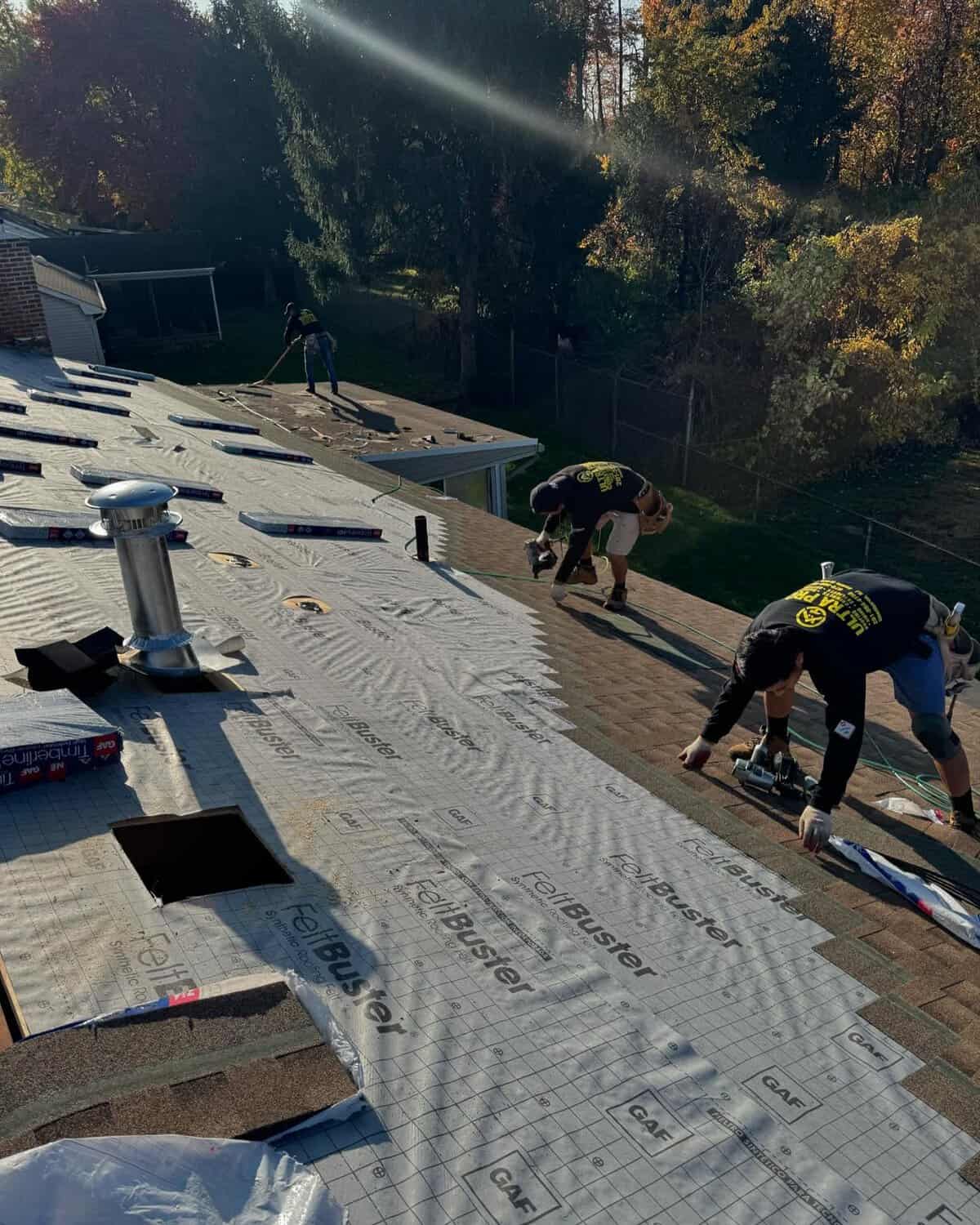
- Is there an ice-and-water barrier at the eaves? Many older NJ roofs were installed without one, or with too narrow a strip. You can’t add it without removing the bottom courses of shingles, so it’s usually done during a replacement.
- Where is the heat coming from? If the attic is warm and poorly sealed, a new roof alone won’t stop the dams. You need attic work too. Many NJ utilities offer rebates for home energy assessments, insulation and air sealing, so check your gas or electric company’s website.
When we replace a roof, ice-and-water barrier at the eaves and balanced ventilation are standard, not upgrades. See what a new roof costs in NJ.
Frequently asked questions
Will an ice dam damage my roof?
The ice itself can lift shingles and pull down gutters. The bigger damage is hidden: water backing up into the decking, insulation and walls, which can lead to rot and mold if it happens year after year.
Does insurance cover ice dam damage?
Many policies cover the interior water damage from an ice dam, but not the cost of fixing the attic or ventilation problem behind it. Check your policy, and document the damage with photos right away. See our winter roof leak guide.
Are icicles always a bad sign?
Not always, but big icicles with ice built up on the shingles behind them are a warning that a dam is forming.
When is the best time to fix an ice dam problem?
Remove the ice when it forms. Fix the causes (attic sealing, insulation, ventilation and roof membrane) in spring, summer or fall, before the next snow.
Leaking from an ice dam right now?
Call Ultra Pro Construction at (201) 554-4159. We answer roof emergencies 24/7 across North Jersey. Once the weather breaks, we’ll inspect your roof edge, flashing and attic ventilation, and tell you exactly why your house makes ice dams and what it takes to stop them. Book a free roof inspection.