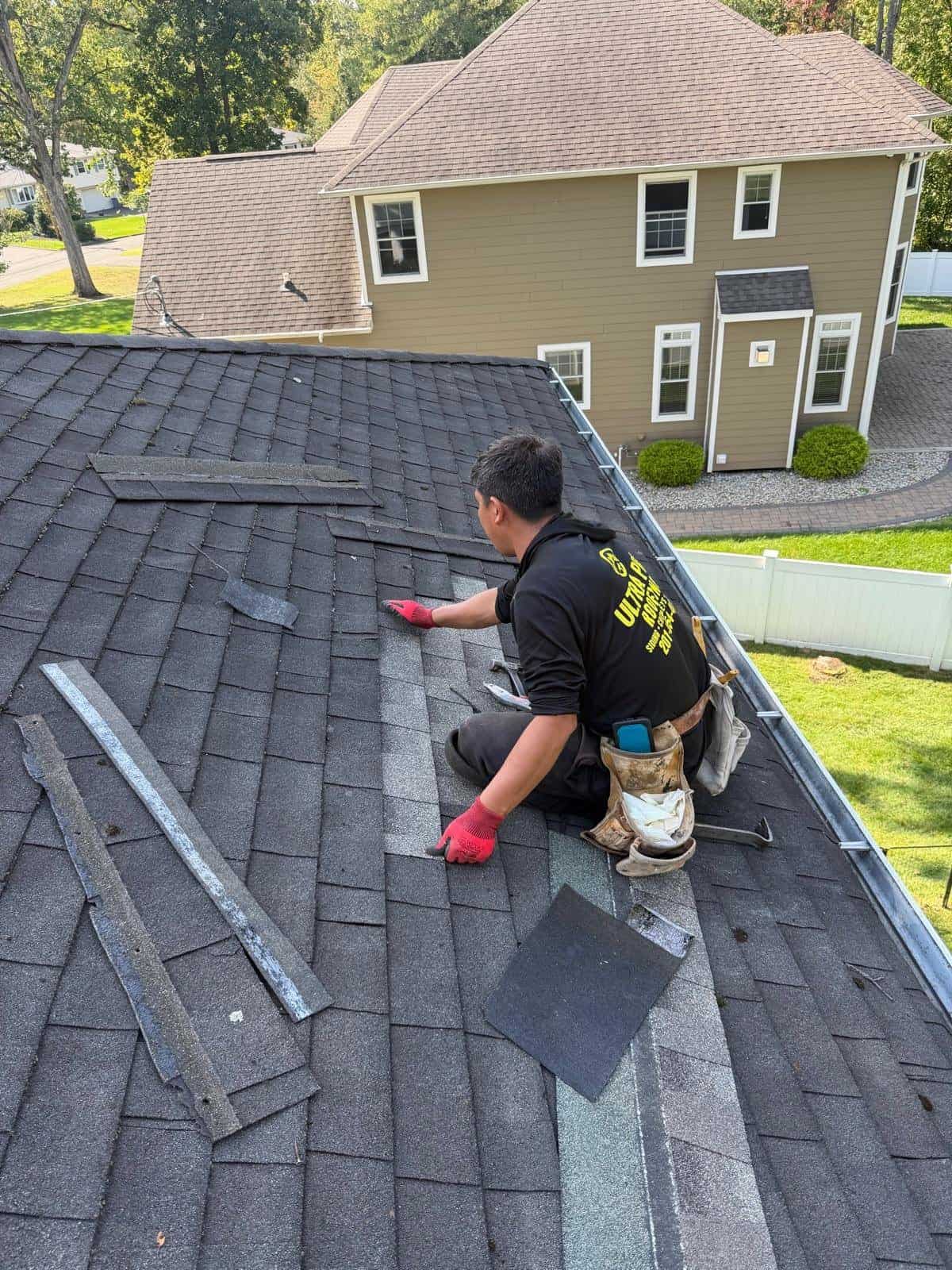
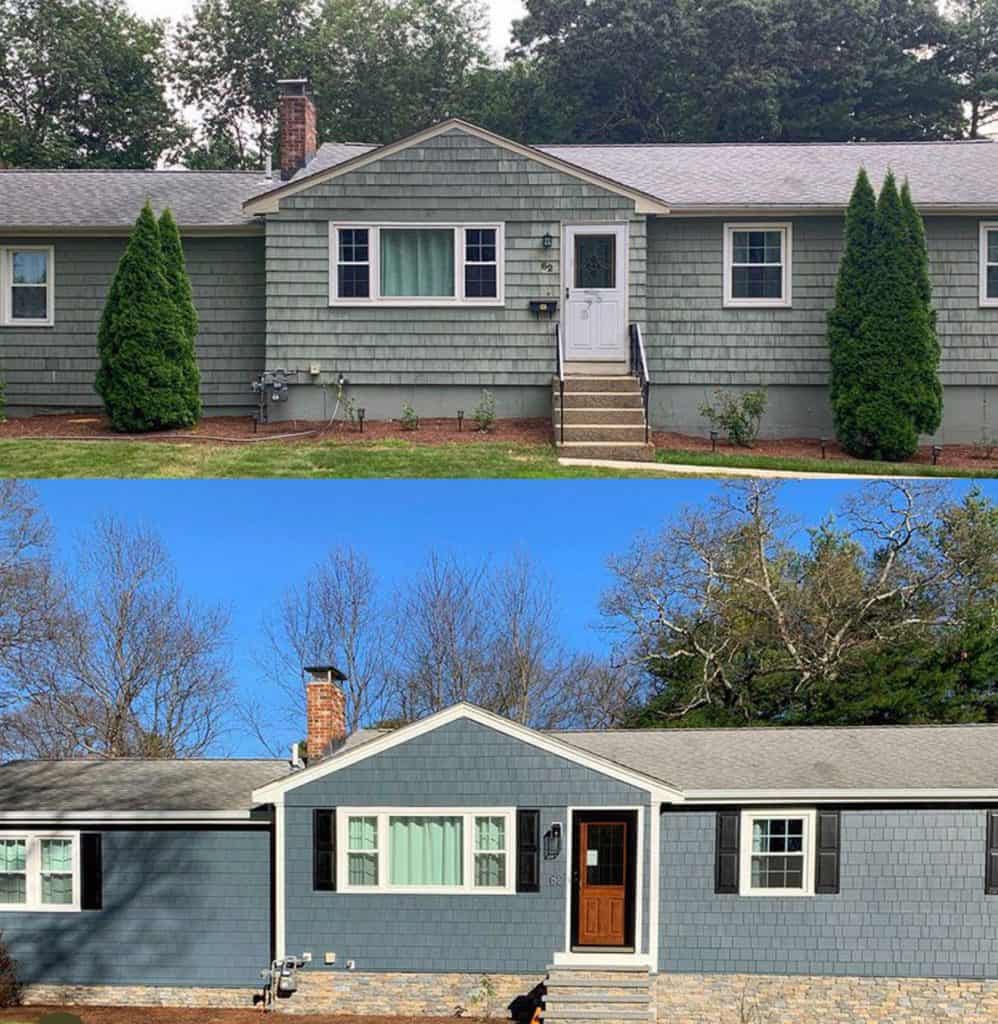
A full asphalt-shingle roof replacement in New Jersey typically runs from about $8,500 for a small, simple roof to well over $30,000 for a large or steep one. Price guides put NJ asphalt shingles at $3–$7 per square foot and architectural shingles at $7–$15. What decides where your home lands is roof size and pitch, how many old layers come off, decking condition, and how the chimney, walls and valleys are flashed. Only a measured estimate gives you a real number.
What New Jersey homeowners are paying
Two respected sources give very different numbers, and both are right for what they measure.
| Roofing material | NJ installed cost per sq ft |
|---|---|
| Asphalt shingles | $3 – $7 |
| Architectural shingles | $7 – $15 |
| Metal | $9 – $17 |
| Slate | $10 – $20 |
Source: Fixr, New Jersey roof replacement costs, updated March 2026. Fixr’s typical NJ range is $8,500 to $17,000, with an average of $13,500 for a 1,700 sq ft gable roof with architectural shingles.
The 2025 Cost vs. Value report puts an asphalt-shingle roof replacement in the Middle Atlantic region (NJ, NY, PA) at $37,201, against a national average of $31,871. That report prices a complete, contractor-built project at full regional labor rates, which is why it runs higher than online calculators.
The takeaway: a quote is not “too high” or “too low” on its own. It has to be compared line by line, which is what the checklist further down is for.
The 7 things that move your price
- Roof size, not house size. Roofers price by the “square”, which is 100 sq ft of roof surface. Because of pitch and overhangs, a 1,500 sq ft ranch can easily have 18 to 20 squares of roof.
- Pitch and height. Steep roofs need more safety gear and go slower, and three-story homes cost more than ranches.
- Tear-off layers. Code allows at most two layers of shingles. Many older NJ homes already have two, so both must come off, and removal and disposal are priced per square.
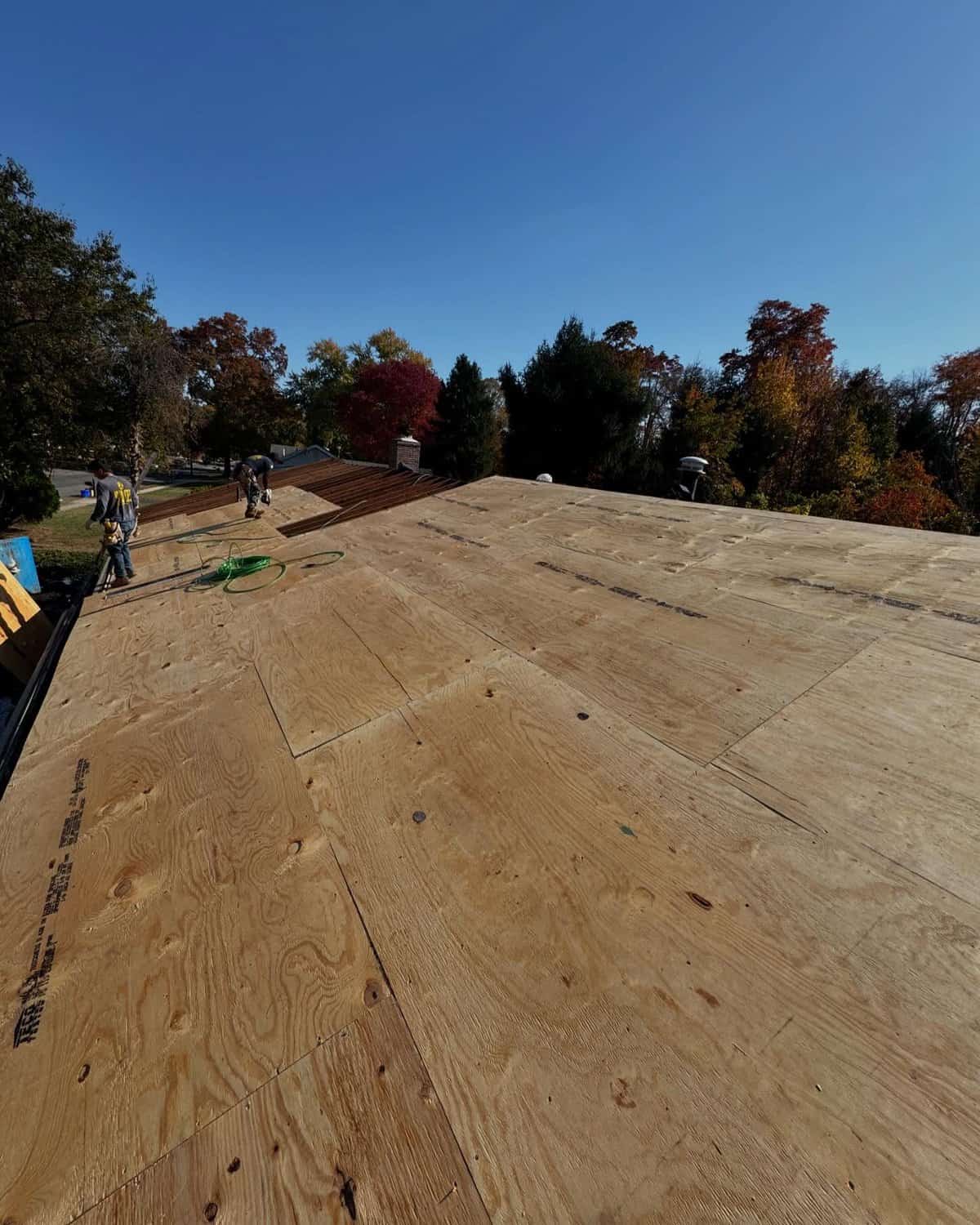
- Decking. Rotted or delaminated plywood can only be seen once the old shingles are off. A fair contract states a price per sheet up front, so you’re not surprised mid-job.
- Ice and water barrier. Code requires this membrane along the eaves where ice dams are a risk. Good contractors also run it in valleys and around chimneys and skylights. It’s one of the biggest quality differences between quotes.
- Flashing. Chimneys, skylights, walls and plumbing vents are where roofs leak. Reusing old flashing saves money today and causes leaks tomorrow (more in our chimney flashing guide).
- Ventilation. Balanced intake at the soffits and exhaust at the ridge extends shingle life and is the main defense against winter ice dams and attic condensation.
Do you need a permit for a new roof in New Jersey?
Usually not for the shingles themselves. New Jersey’s construction code treats replacing existing roof covering on a detached one- or two-family home as “ordinary maintenance” (N.J.A.C. 5:23-2.7), which doesn’t need a construction permit. Work that affects the structure, such as replacing rafters, does need one. Rules for multi-family and commercial buildings are different, so check with your township’s construction office.
Can you replace a roof in winter in New Jersey?
Yes, with the right precautions, and many NJ winter days are perfectly workable. GAF, the largest U.S. shingle maker, recommends installing at or above 40°F, because below that shingles get stiff and the factory sealant strip won’t activate until warmer weather. When we roof in cold weather, we follow GAF’s cold-weather practices:
- Hand-sealing. We put quarter-sized dabs of roofing cement under each shingle tab, so shingles hold against wind until the sun seals them.
- Warm storage. Bundles are kept warm (GAF suggests 70°F for 24 hours) and brought up in small batches, so they don’t crack.
- Dry deck only. No installing over frost, ice or snow. We work the warmest hours and open only as much roof as we can close the same day.
What we won’t do is rush a roof during a snowstorm or on a frozen deck. If the forecast is bad, we wait. A good contractor will tell you that honestly.
Why winter is the smartest time to plan (even if you install in spring)
- Real attention. Fall and spring are the busy seasons. In winter, estimates get scheduled fast and you aren’t rushed into a decision.
- Find problems early. Winter is when weak roofs show themselves through ice dams, attic frost and leaks around the chimney. An inspection now tells you whether you need a full replacement or can safely wait with a repair. Not sure? Read Do I need a new roof?
- Beat the spring backlog. After a stormy winter, spring calendars fill quickly. Signing in winter locks in your spot.
How to compare roofing quotes: a checklist
Put your quotes side by side and confirm each one answers these:
- Same shingle brand and product line (for example, GAF Timberline HDZ or Owens Corning Duration)
- Full tear-off down to the deck, not shingles laid over old ones
- Price per sheet for any rotten decking
- Ice and water barrier: where it goes (eaves, valleys, chimney, skylights) and how far up
- New flashing at the chimney, walls and vents, not reused
- New drip edge and pipe boots
- Ventilation plan (ridge vent and soffit intake)
- Which manufacturer warranty is registered, and the contractor’s own workmanship warranty, in writing
- Cleanup, magnetic nail sweep and dumpster included
Protect yourself: New Jersey contractor rules
New Jersey law gives homeowners real protection. Use it:
- Registration. Home improvement contractors must be registered with the NJ Division of Consumer Affairs, and the registration number must appear on contracts and ads. NJ numbers start with “13VH”. Ours is 13VH11344600.
- Insurance. Registered contractors must carry at least $500,000 in liability insurance. Ask for the certificate.
- Written contract. Any project over $500 must have a written contract with the contractor’s name, address, registration number, start and completion dates, a description of the work and the total price.
- Cancellation right. You can cancel until midnight of the third business day after you receive your copy of the contract, and any money you paid must be refunded within 30 days.
- Payment. Never pay the full price up front.
Is a new roof worth it?
Beyond stopping leaks, it pays back at sale. Cost vs. Value 2025 estimates that a Middle Atlantic asphalt roof replacement recovers about 58% of its cost in resale value. A new roof also removes the most common objection in buyers’ home inspections, and it often lowers insurance headaches.
Frequently asked questions
How long does a roof replacement take?
Most single-family homes in NJ are done in one to three days, depending on size, pitch, layers and weather.
Can you put new shingles over old ones?
Code allows a second layer in some cases, but we rarely recommend it. It hides rotten decking, adds weight, shortens shingle life and can limit warranty coverage.
Does homeowners insurance pay for a new roof?
Insurance covers sudden damage, like a tree limb or wind that tears off shingles, but not age or wear. If you have storm damage, see our guide to what to do about a winter roof leak.
What’s the best time of year to replace a roof in New Jersey?
Late spring and early fall offer the best installing weather. Winter is the best time to get inspected and book, and mild winter days work for installation with cold-weather practices.
Get a free, measured roof estimate
Ultra Pro Construction is a GAF Certified Plus and Owens Corning Preferred roofing contractor based in Ridgewood, NJ, licensed (13VH11344600), fully insured and BBB A+ rated. We measure your roof, photograph what we find, and give you a line-by-line written estimate.
Save $1,000 on a new roof when you mention our website. Call (201) 554-4159 or book your free estimate. See our roofing services.